
The officials say no "concrete move" has yet been taken to take the matter to the Union cabinet for approval after the recommendation of the Committee of Secretaries (CoS) on July 22 to allow 51 per cent FDI.

Around 75 tariff lines or products from Pakistan would get concessional access to European markets for three years.
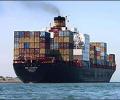
The US and European markets account for 35 per cent of export revenue and a big portion of volumes.

Emerging consensus is that all state capitals be covered.

The committee of secretaries (CoS) looking into the issue of allowing foreign direct investment (FDI) in the multi-brand retail segment is likely to meet this Friday to try for more agreement on the issue.

Says allow companies with up to 49% FDI to invest in restricted sectors.

Meeting is on June 24-25 on stalled pact, agreement likely by year-end.
Even as the debate around whether the Doha Round of global trade talks would be concluded by the year-end or not gain momentum, a cohort of developing countries, specifically India, has refused to accept the April 21 texts which call for mandatory sectoral tariff cuts as the basis of negotiations, despite US pressure.

Trade between India and Pakistan reached $1.85 billion in 2010-11, compared to $3 billion with Sri Lanka.

At present, a maximum of 26 per cent is allowed in the defence sector.

Political leaders, industrialists and businessmen are increasingly looking to tap the resource-rich countries of the world's second largest continent even as two-way trade between India and Africa is poised to reach $70 billion by 2015 from $46 billion at present.

Analysts believe engineering exports would soon dominate the country's foreign trade, thanks to a conscious policy shift towards building strength and capitalising on critical industries such as engineering and chemicals.

While Pakistan has been showing considerable interest in having a bilateral trade deal with India that would help them access the country's booming markets, India has stated this can only become a possibility only when it recognises India as their non-discriminatory trading partner, commerce secretary Rahul Khullar told in an interview.

The India-Asean free trade agreement (FTA) in merchandise goods has failed to realise its full potential, even as the deal was implemented in January 2010 to facilitate greater trade in the region. As a result, reduction of duties on several products might get delayed.

The US has emphasised on the need for an "ambitious and balanced outcome", even as the World Trade Organization (WTO) is gearing up to circulate another set of texts to push all its 153 members to wrap up the Doha Round of global trade talks by the end of this year.

FDI is essentially long-term investments that come with added benefits such as better technology, management and marketing assistance, says the study.

The revised version of the FDI policy, which will be released on March 31, is expected to do away with Press Note 1, 2005, to bring in the above-mentioned change.

Under the services sector, India had been demanding greater opening, so that more professionals like doctors, nurses, chefs, accountants get greater job opportunities.
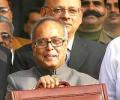
Ministry will give relief to exporters through a mechanism that will enable a timely refund of credit balance and time-bound refund of additional duty of customs.
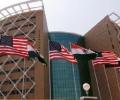
India and the US are set to address some of the prickly issues that have acted as major irritants in the commercial relations between both countries recently, to ensure greater flow of trade and investment.
 © 2026 Rediff.com - Advertise with us - Disclaimer - Privacy Policy - Sitemap - Feedback - About us - Terms of use - Grievances